B2B lead generation has evolved dramatically in the past five years. Traditional tactics like cold calling and trade show booths have given way to sophisticated, multi-channel approaches that combine automation, personalization, and data-driven targeting. The constant across all of them is the target list: strategy only starts once you know exactly who you are contacting, which is why buying a verified B2B email list is often the cheapest first step.
Short answer
B2B lead generation runs on three routes: outbound (cold email and calling into a defined target list), inbound (content and search that attracts buyers already looking), and hybrid plays such as ABM that combine both. Outbound produces pipeline fastest because you choose who hears from you; inbound compounds but takes quarters. Most teams start outbound and layer inbound on once a repeatable message exists.
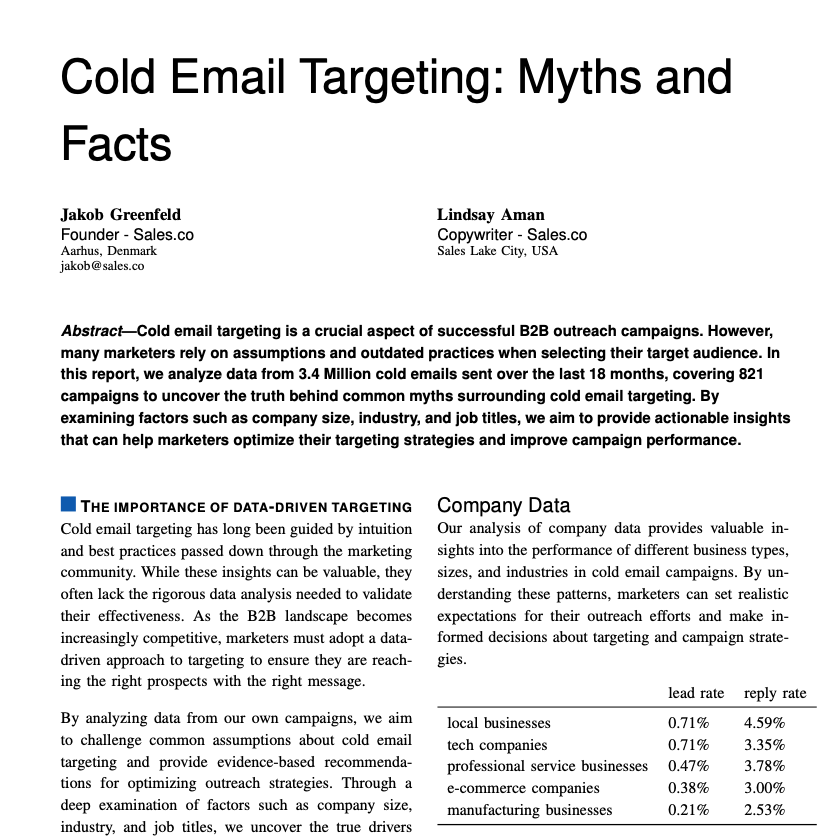
The most successful B2B companies today generate 500+ qualified leads monthly through systematic, scalable processes that nurture prospects from awareness to purchase decision. This comprehensive guide outlines 15 proven strategies that drive consistent lead generation results. On the outbound side, expected returns are published: our benchmarks from 2M+ cold emails give the reply rates a campaign should be measured against.
Foundation: Lead Generation Strategy Framework
Before diving into specific tactics, successful lead generation requires a strategic foundation built on three core elements:
Ideal Customer Profile (ICP) Definition
Your ICP defines the companies most likely to buy your product and achieve success with it. A well-defined ICP includes:
- Company Size: Employee count, revenue range, funding stage
- Industry Vertical: Specific industries or market segments
- Technology Stack: Tools and platforms they currently use
- Growth Stage: Startup, scale-up, enterprise, or mature
- Geographic Location: Regional or global presence requirements
- Business Model: B2B, B2C, marketplace, SaaS, etc.
Buyer Persona Development
Within your ICP, identify the specific individuals who influence or make purchasing decisions:
- Primary Decision Maker: Final authority on purchase decisions
- Technical Evaluator: Assesses product functionality and integration
- Economic Buyer: Controls budget and financial approval
- End User: Will use the product daily
- Champion: Internal advocate who promotes your solution
Lead Scoring and Qualification
Implement a systematic approach to evaluate lead quality:
BANT Qualification Framework:
- Budget: Financial resources available for purchase
- Authority: Decision-making power within organization
- Need: Clear business problem or opportunity
- Timeline: Urgency and decision-making timeframe
Outbound Lead Generation Strategies
Outbound strategies involve proactively reaching out to potential customers who haven't expressed interest in your solution.
Strategy 1: Multi-Touch Cold Email Campaigns
Systematic email sequences that nurture prospects through multiple touchpoints:
Campaign Structure:
- Email 1: Research-based personalization with specific value proposition
- Email 2: Case study or social proof relevant to their industry
- Email 3: Educational content addressing common challenges
- Email 4: Soft breakup email with final value offer
Best Practices:
- Personalize beyond name and company
- Lead with value, not product features
- Use plain text format for better deliverability
- A/B testing subject lines and messaging
- Track engagement and optimize based on data
Expected Results: 15-25% open rates, 3-8% response rates, 1-3% meeting booking rates
Strategy 2: LinkedIn Social Selling
Leverage LinkedIn's professional network for targeted outreach and relationship building:
LinkedIn Outreach Process:
- Profile Optimization: Professional headshot, compelling headline, detailed experience
- Content Strategy: Share industry insights, company updates, thought leadership
- Connection Strategy: Send personalized connection requests with specific reasons
- Engagement Strategy: Comment on prospects' posts before direct outreach
- Message Sequence: Multi-touch approach similar to email campaigns
LinkedIn Sales Navigator Benefits:
- Advanced search filters for precise targeting
- Lead recommendations based on ideal customer profile
- Real-time insights on prospect activity
- CRM integration for seamless workflow
Expected Results: 40-60% connection acceptance rates, 10-20% response rates to messages
Strategy 3: Account-Based Marketing (ABM)
Highly targeted approach focusing on specific high-value accounts:
ABM Implementation:
- Account Selection: Identify 20-100 target accounts with highest potential value
- Research Phase: Deep dive into account challenges, initiatives, and stakeholders
- Personalized Content: Create account-specific content and messaging
- Multi-Channel Coordination: Coordinate outreach across email, LinkedIn, ads, and events
- Sales-Marketing Alignment: Ensure consistent messaging and handoff processes
ABM Tactics:
- Personalized landing pages for target accounts
- Custom video messages for key stakeholders
- Direct mail campaigns with relevant gifts
- Targeted LinkedIn and Google ads
- Executive briefing sessions
Expected Results: 20-40% higher engagement rates, 2-3x higher deal values
Strategy 4: Strategic Cold Calling and Phone Outreach
While challenging, phone outreach remains effective when executed strategically:
Modern Cold Calling Approach:
- Research-Driven: Understand prospect's business before calling
- Value-First: Lead with insights or industry trends
- Permission-Based: Ask for permission to continue conversation
- Follow-Up Focused: Goal is to schedule follow-up, not close deal
Call Script Framework:
- Opening (10 seconds): Introduction and permission request
- Reason (20 seconds): Specific reason for calling with value proposition
- Question (30 seconds): Engage prospect with relevant business question
- Close (10 seconds): Request for follow-up meeting or next step
Expected Results: 5-15% connection rates, 1-5% meeting booking rates
Inbound Lead Generation Strategies
Inbound strategies attract prospects who are actively seeking solutions to their problems.
Strategy 5: Content Marketing and SEO
Create valuable content that attracts prospects through organic search:
Content Types That Generate Leads:
- Educational Blog Posts: How-to guides, industry insights, best practices
- Comparison Content: Product comparisons, vendor evaluations
- Case Studies: Customer success stories with specific results
- Industry Reports: Research-backed insights and trends
- Templates and Tools: Practical resources prospects can use immediately
SEO Optimization Strategy:
- Target long-tail keywords with buying intent
- Create topic clusters around core business themes
- Optimize for featured snippets and voice search
- Build authoritative backlinks through guest posting
- Focus on technical SEO fundamentals
Expected Results: 20-40% increase in organic traffic, 2-5% conversion rates
Strategy 6: Lead Magnets and Gated Content
Offer valuable resources in exchange for contact information:
High-Converting Lead Magnet Types:
- Industry Benchmarking Reports: Performance data and comparisons
- ROI Calculators: Interactive tools for business impact calculation
- Implementation Guides: Step-by-step process documentation
- Email Templates: Proven templates for specific use cases
- Checklists: Comprehensive evaluation or implementation checklists
- Webinar Recordings: Educational sessions with industry experts
Lead Magnet Optimization:
- Align content with buyer journey stage
- Use compelling headlines and value propositions
- Minimize form fields (name and email only initially)
- Deliver content immediately via email
- Follow up with nurturing sequence
Expected Results: 15-30% conversion rates on landing pages
Strategy 7: Webinars and Virtual Events
Educational events that demonstrate expertise and generate qualified leads:
Webinar Strategy:
- Topic Selection: Address common challenges or industry trends
- Expert Positioning: Feature internal experts or industry guests
- Educational Focus: Provide value before pitching products
- Interactive Elements: Q&A sessions, polls, and live chat
- Follow-Up Process: Immediate outreach to attendees and no-shows
Promotion Tactics:
- Email campaigns to existing database
- Social media promotion across platforms
- Partner and customer co-promotion
- Paid advertising to targeted audiences
- Industry publication partnerships
Expected Results: 20-40% attendance rates, 10-25% of attendees become qualified leads
Strategy 8: Search Engine Marketing (SEM)
Paid search campaigns targeting high-intent keywords:
Google Ads Strategy:
- Keyword Research: Target buyer-intent keywords with commercial value
- Ad Copy Optimization: Compelling headlines with clear value propositions
- Landing Page Alignment: Consistent messaging from ad to landing page
- Conversion Tracking: Measure leads, not just clicks
- Negative Keywords: Exclude irrelevant traffic to improve quality
Campaign Types:
- Search Campaigns: Target specific product or solution keywords
- Competitor Campaigns: Target competitor brand names
- Remarketing Campaigns: Re-engage website visitors
- Display Campaigns: Visual ads on relevant industry websites
Expected Results: 2-8% click-through rates, 5-15% conversion rates
Hybrid and Multi-Channel Strategies
Combine inbound and outbound tactics for maximum impact. On the outbound side, start from a format that has already booked meetings: our B2B cold email examples list the reply rate each one earned.
Strategy 9: Social Media Marketing
Build brand awareness and generate leads through social platforms:
Platform-Specific Strategies:
LinkedIn:
- Thought leadership content from executives
- Company page optimization with regular updates
- LinkedIn ads targeting specific job titles and companies
- Employee advocacy programs
Twitter:
- Industry news commentary and insights
- Participation in relevant hashtag conversations
- Twitter threads on complex topics
- Real-time customer support and engagement
YouTube:
- Educational video content and tutorials
- Product demonstration and case studies
- Industry expert interviews
- SEO optimization for video search
Expected Results: 10-25% increase in brand awareness, 2-8% conversion rates from social traffic
Strategy 10: Partnership and Channel Marketing
Leverage partner networks to expand reach and generate qualified referrals:
Partnership Types:
- Technology Partners: Integration partners with complementary solutions
- Consulting Partners: Agencies and consultants serving your target market
- Reseller Partners: Companies that sell your product directly
- Referral Partners: Non-competing companies with shared customers
Partner Program Elements:
- Clear partner onboarding and training process
- Marketing development funds (MDF) for co-marketing
- Lead sharing and attribution systems
- Joint go-to-market strategies
- Regular partner business reviews
Expected Results: 15-30% of total leads through partner channels
Strategy 11: Email Marketing and Lead Nurturing
Systematic email campaigns that educate prospects and drive conversions:
Nurturing Campaign Types:
Welcome Series:
- Email 1: Welcome and expectation setting
- Email 2: Educational content relevant to their interests
- Email 3: Case study or customer success story
- Email 4: Product demonstration or trial offer
- Email 5: Sales consultation invitation
Educational Series:
- Multi-part content series on specific topics
- Industry insights and trend analysis
- Best practices and implementation guides
- Tool recommendations and comparisons
Behavioral Triggers:
- Website page visits and content downloads
- Email engagement patterns
- Product trial or demo requests
- Pricing page visits
Expected Results: 15-25% open rates, 3-8% click rates, 5-15% conversion rates
Advanced Lead Generation Tactics
Strategy 12: Intent Data and Predictive Analytics
Use data signals to identify prospects actively researching solutions:
Intent Data Sources:
- First-Party Data: Website behavior, content engagement, email activity
- Third-Party Data: External research activity and content consumption
- Technographic Data: Technology stack changes and implementations. Installmap's group crawls publish the share of each named company list running each tool, with the crawled base under every figure.
- Firmographic Data: Company growth, funding, and organizational changes
Implementation Strategy:
- Integrate intent data with CRM and marketing automation
- Score leads based on intent signals and fit
- Trigger automated outreach based on intent spikes
- Personalize messaging based on research topics
Expected Results: 25-50% improvement in lead quality, 15-30% higher conversion rates
Strategy 13: Conversational Marketing and Chatbots
Real-time engagement through website chat and messaging platforms:
Chatbot Implementation:
- Qualification Bots: Pre-qualify leads through automated questions
- Scheduling Bots: Book meetings directly through chat interface
- Support Bots: Answer common questions and route complex queries
- Content Bots: Recommend relevant resources based on interests
Live Chat Strategy:
- Strategic placement on high-intent pages
- Proactive chat triggers based on behavior
- Quick response times (under 2 minutes)
- Seamless handoff to sales team
Expected Results: 10-40% increase in website conversion rates, 30-60% lead response time improvement
Strategy 14: Video Marketing and Personalization
Leverage video content for engagement and personalized outreach:
Video Content Types:
- Educational Videos: How-to content and industry insights
- Product Demos: Feature walkthroughs and use case examples
- Customer Stories: Video testimonials and case studies
- Personalized Videos: Custom videos for high-value prospects
- Webinar Recordings: Repurposed educational content
Video Distribution Strategy:
- YouTube channel optimization for search
- Social media platform native videos
- Email campaigns with video thumbnails
- Landing page video integration
- Sales outreach video messages
Expected Results: 20-80% higher engagement rates, 15-25% improvement in conversion rates
Strategy 15: Community Building and Thought Leadership
Build industry communities and establish thought leadership:
Community Platforms:
- Slack Communities: Industry-specific discussion groups
- LinkedIn Groups: Professional networking and discussion
- Facebook Groups: Casual industry conversations
- Discord Servers: Real-time chat communities
- Private Forums: Exclusive customer and prospect communities
Thought Leadership Strategy:
- Speaking at industry conferences and events
- Publishing in industry publications
- Hosting podcasts or appearing as guest
- Contributing to industry research and reports
- Participating in panel discussions
Expected Results: Long-term brand building, 10-20% increase in inbound leads
Measurement and Optimization
Key Metrics to Track
Volume Metrics:
- Total leads generated per month
- Leads by source and campaign
- Marketing qualified leads (MQLs)
- Sales qualified leads (SQLs)
Quality Metrics:
- Lead-to-customer conversion rate
- Average deal size by lead source
- Sales cycle length
- Customer lifetime value (LTV)
Efficiency Metrics:
- Cost per lead (CPL)
- Customer acquisition cost (CAC)
- Return on marketing investment (ROMI)
- Lead velocity rate
Continuous Optimization Framework
Monthly Reviews:
- Analyze performance by channel and campaign
- Identify top-performing and underperforming tactics
- Review lead quality and sales feedback
- Adjust budget allocation based on ROI
Quarterly Planning:
- Evaluate overall strategy effectiveness
- Plan new channel experiments
- Update ideal customer profile based on data
- Align marketing and sales on lead definitions
Conclusion: Building Your Lead Generation Engine
Successful B2B lead generation requires a systematic approach that combines multiple strategies, consistent execution, and continuous optimization. The 15 strategies outlined in this guide provide a comprehensive framework for generating 500+ qualified leads monthly. If executing them in-house is the constraint rather than choosing them, compare the options in our guide to B2B lead generation agencies and companies.
Implementation Priorities:
- Foundation First: Define ICP, buyer personas, and lead scoring
- Start with Strengths: Focus on 2-3 strategies that align with your team's skills
- Measure Everything: Implement tracking and attribution from day one
- Test and Iterate: Continuously optimize based on performance data
- Scale What Works: Double down on highest-ROI channels
Success Factors:
- Consistent execution over perfection
- Data-driven decision making
- Sales and marketing alignment
- Long-term relationship building
- Continuous learning and adaptation
Remember: lead generation is a marathon, not a sprint. Focus on building sustainable systems that generate consistent, high-quality leads over time rather than seeking quick wins that don't scale.